Towards climate neutrality
.avif)
Gypsum-based solutions play a crucial role in decarbonising the building stock due to their low embodied carbon and being part of energy efficiency systems. Furthermore, the industry is committed to further reducing its emissions.
Did you know?
The energy needed for the manufacturing of gypsum products has already been reduced substantially - estimated to have decreased by over 60% since the 1950s.
The gypsum industry is an enabling sector and is actively contributing to achieving the European Union’s climate neutrality objectives by 2050 through:
- Reducing resource and energy use through manufacturing transformation.
- A switch to renewable energy sources.
- A higher share of recycled, alternative and/or low CO2 raw materials.
- Innovative solutions contributing to the climate resilience of the built environment.
- Engagement & collaboration with the full value chain.
Average carbon footprint of our products:
0.1 kg CO2 per 1 kg of plaster
2 kg CO2 per 1 m² of plasterboard
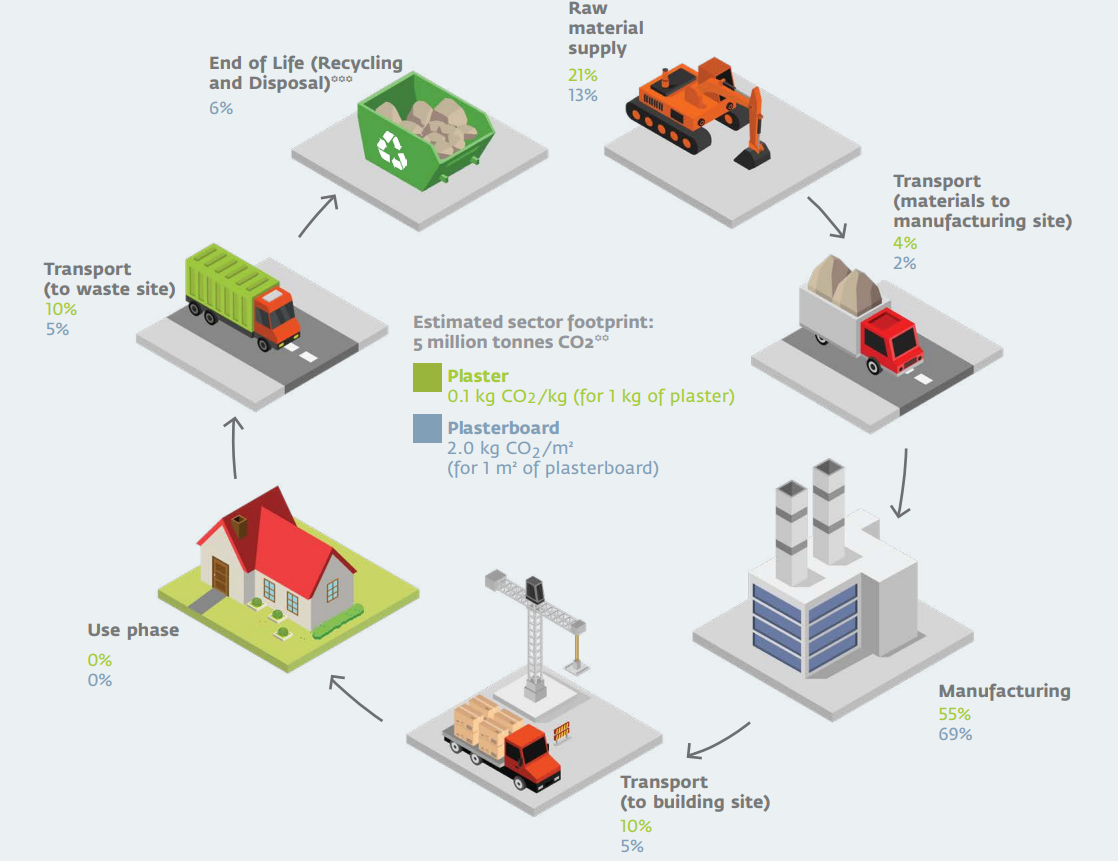
In 2024, Eurogypsum presented its roadmap “Towards Climate Neutrality with Gypsum” outlining solutions and policy conditions needed to decarbonise the industry. Gypsum production requires relatively low temperatures (around 200°C), making it easier to abate than many energy‑intensive sectors. Key decarbonisation solutions are already technologically mature, such as electrification, alternative fuels, and heat recovery. However, supportive conditions are essential to enable industry players to invest in these transformations while remaining competitive.
What enabling conditions do we need to decarbonise?
- Affordable and available renewable energy in sufficient volumes, to bring about emissions reductions through greener energy supply and electrification of the processes.
- Access to investment, including EU funding programmes, for net-zero innovation, with a stable policy landscape to foster market confidence and allow the industry to develop innovative solutions and perform the necessary transformation of our processes.
- Use of a predictable carbon price signal to ensure companies can make the significant investments necessary to decarbonise their production processes and value chains.
- Demand-driving policies supporting new build construction and building renovations, as well as novel building techniques, and encouraging the use of more sustainable lightweight construction to drive the transformation of Europe’s building stock.
- Incentives for best performers, rewarding enabling businesses and sectors and those creating the biggest contributions to the EU’s climate objectives.