Water resilience
The water use of the gypsum industry
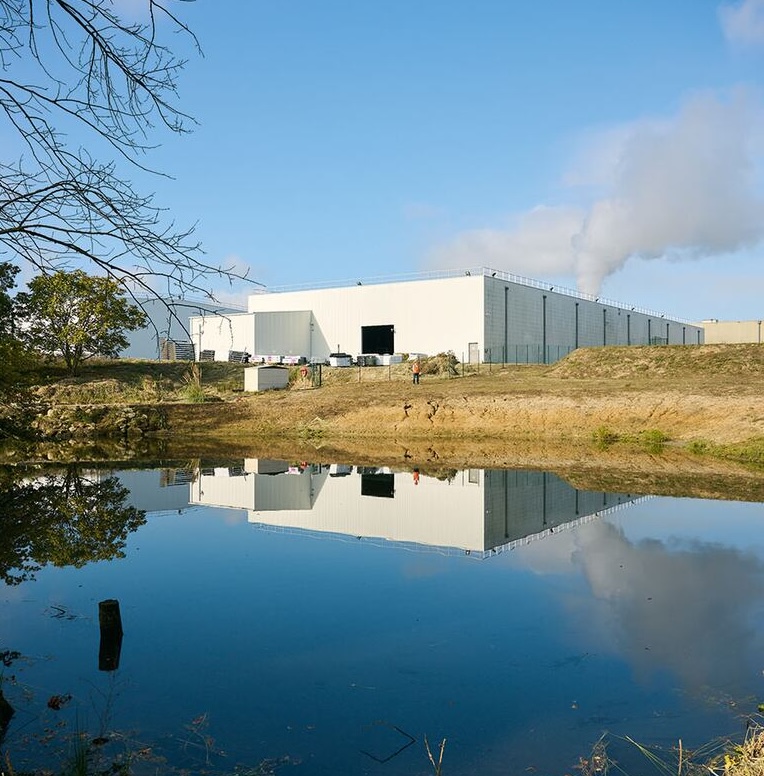
Given the local nature of the industry, operations are carried out in a wide range of environments, where water availability can vary significantly.
Gypsum products manufacturers are therefore sensitive to a responsible water management and to the reduction of the overall water consumption. Extracting gypsum is usually carried out in a dry environment, that does not need additional water. In the case of plaster manufacturing, it is a dry process that involves no direct use of water.
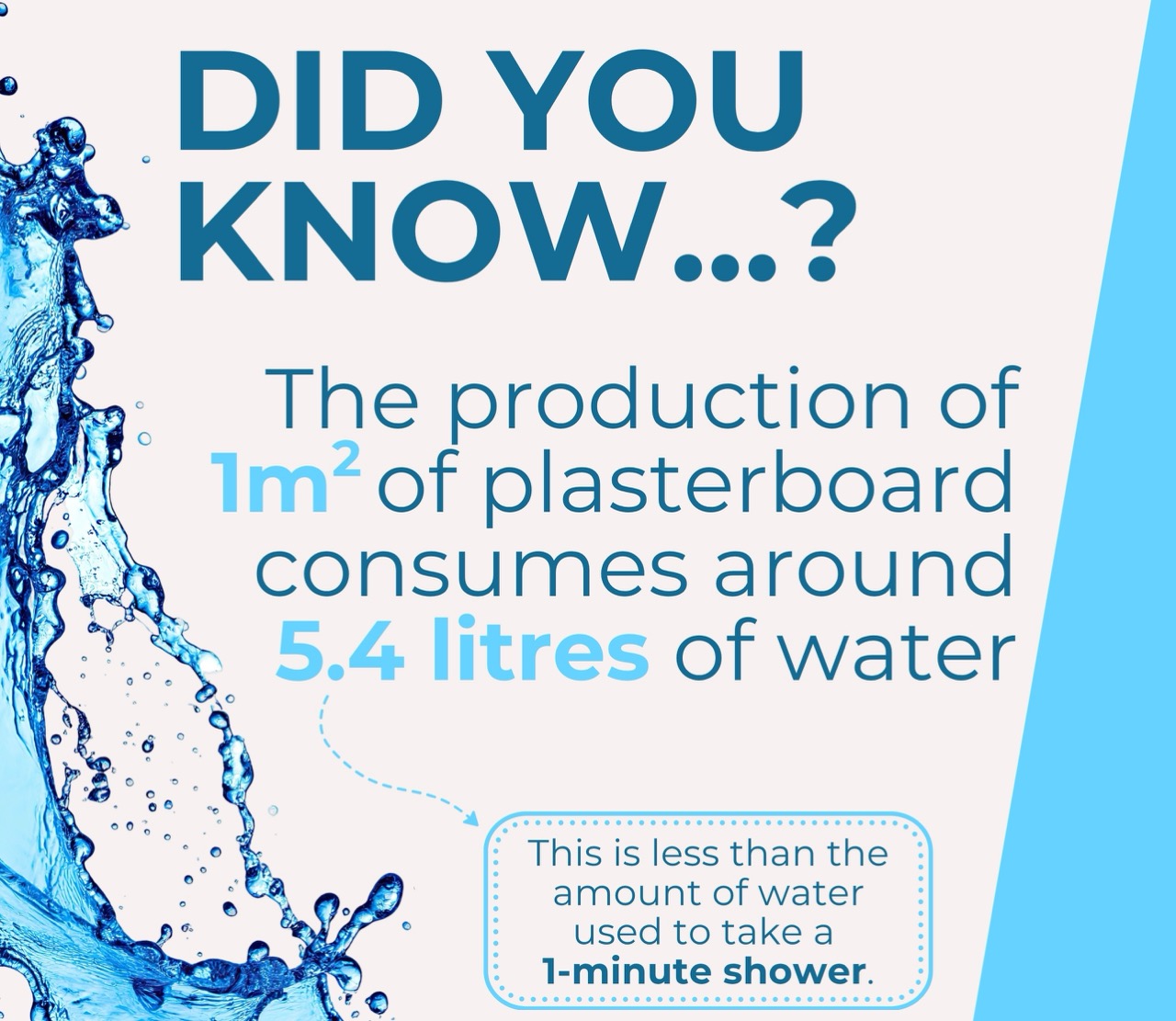
However, other gypsum-based products manufacturing processes, e.g. for plasterboard, require more water. Indeed, water is an integral and fundamental raw material for the production of plasterboard. In 2023, the average water consumption to produce 1 m² of plasterboard was around 5.4 litres.
Water as part of plasterboards
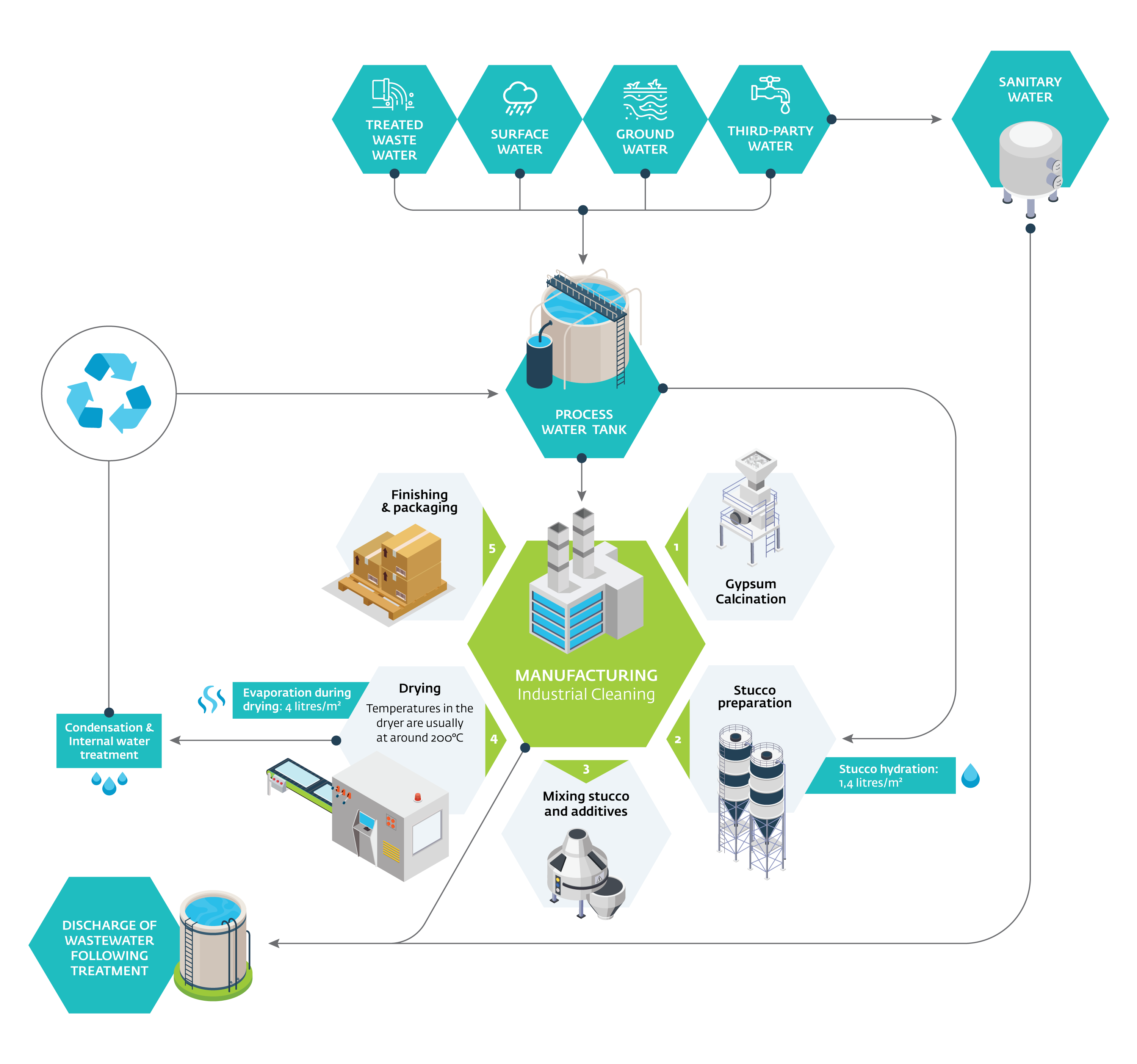
Gypsum rock (CaSO₄·2H₂O) naturally contains water in its crystal structure. To make gypsum-based products like plasterboard, this water is partially removed through calcination, transforming it into hemihydrate (CaSO₄·0.5H₂O) that can later rehydrate and harden when mixed with water. Once the boards are formed, they are cut and go through the drying process, where excess water evaporates. Since too much water impairs formation, plants have long worked to optimise consumption.
Future commitment to water reduction
Since 2003, efforts have been made to reduce the amount of water used in plasterboard production, resulting in a decrease of at least 5%. Through Life Cycle Assessment and Environmental Product Declarations the gypsum industry monitors its water footprint. Quantifying and understanding the water footprint allows the sector to focus its resources on prioritising opportunities to reduce the water footprint in the future.
The gypsum industry wants to be part of the solution towards the EU ambition of increasing water efficiency by at least 10% by 2030. At EU level, we support funding opportunities for water infrastructure and the creation of the right framework conditions to facilitate long-term investment.
Find out more about our industry’s water use, best practices and specific ways to further improve our water footprint in our roadmap.