Circularity
Gypsum being an eternally recyclable mineral, the European gypsum industry is committed to a circular economy. To use mineral resources in the most effective and responsible way, our industry has made considerable efforts to promote the recycling of plasterboards in a closed loop.
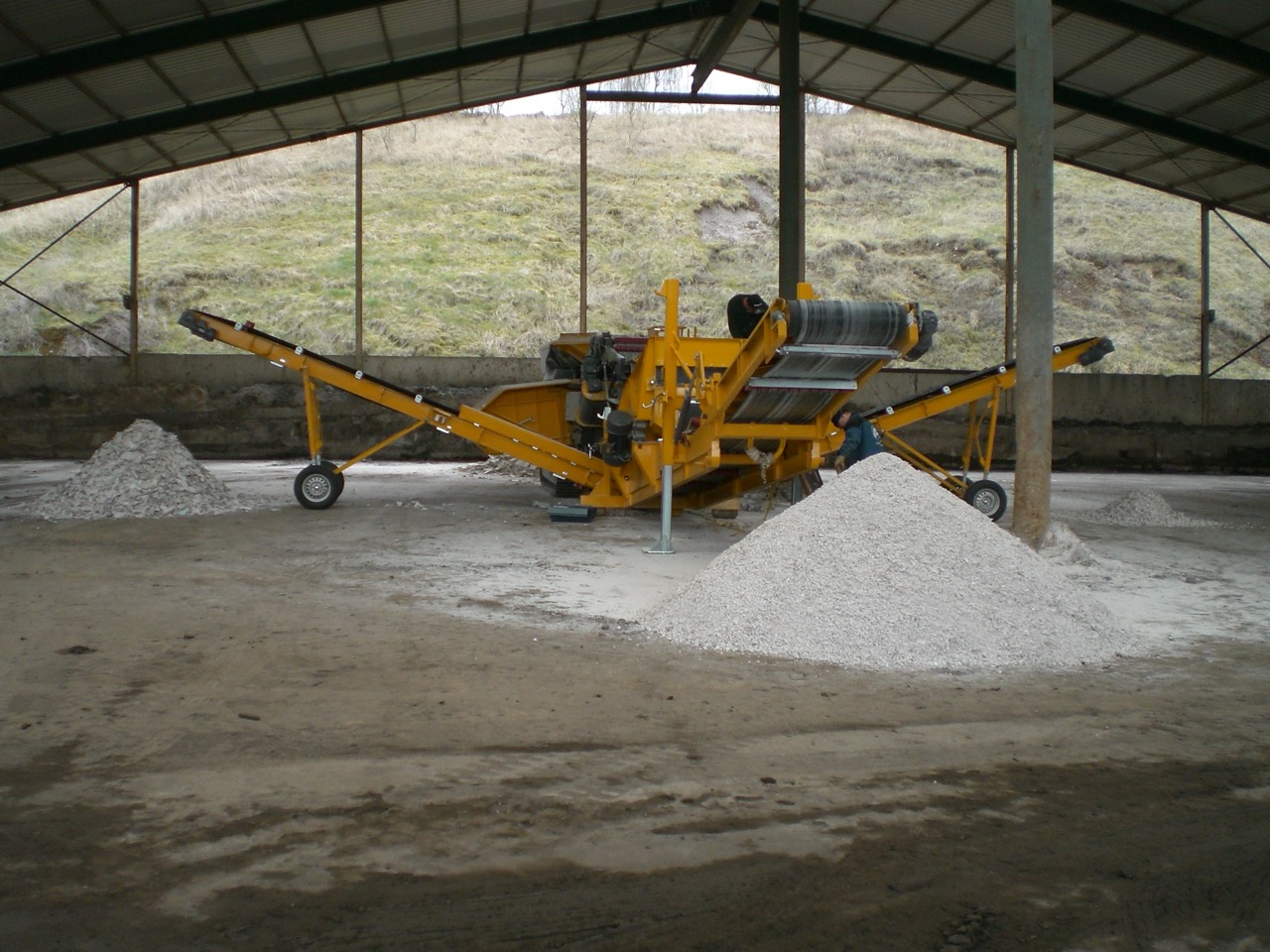
Eurogypsum commitment to recycling
A key milestone has been the “Gypsum to Gypsum” (G to G) project supported by the European Union in 2013-2015, which demonstrated in particular the possibility to manufacture plasterboard with 30% content of gypsum waste from production, construction and demolition. You can find out more about this project by reading the Layman’s Report, downloading all project reports or watching short videos about G to G.
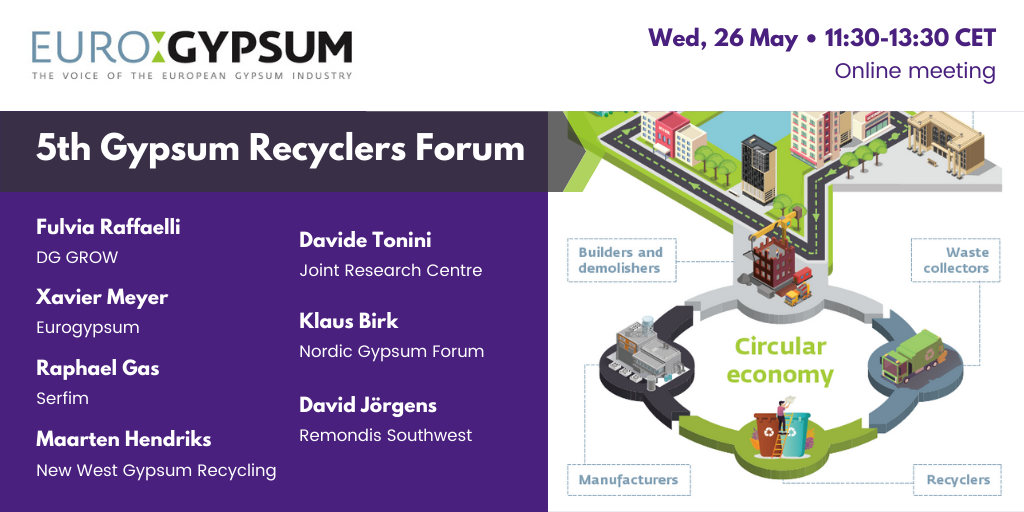
Achieving fully functional closed-loop recycling of plasterboard throughout Europe is a priority for Eurogypsum and its members. This requires close cooperation and regular dialogue with the entire recycling chain. That is why Eurogypsum organises the European Gypsum Recyclers Forum every two years, bringing together experts from the gypsum industry with other stakeholders in the recycling chain. You can find out more about the latest editions of the Recyclers Forum here.
Furthermore, Eurogypsum has published quality criteria for recycled gypsum. The document outlines specifications that can be adopted by reprocessors for producing defined grades of reprocessed gypsum from waste plasterboard or other gypsum-based products. This will assure potential customers that they are procuring a material of consistent and verifiable quality.
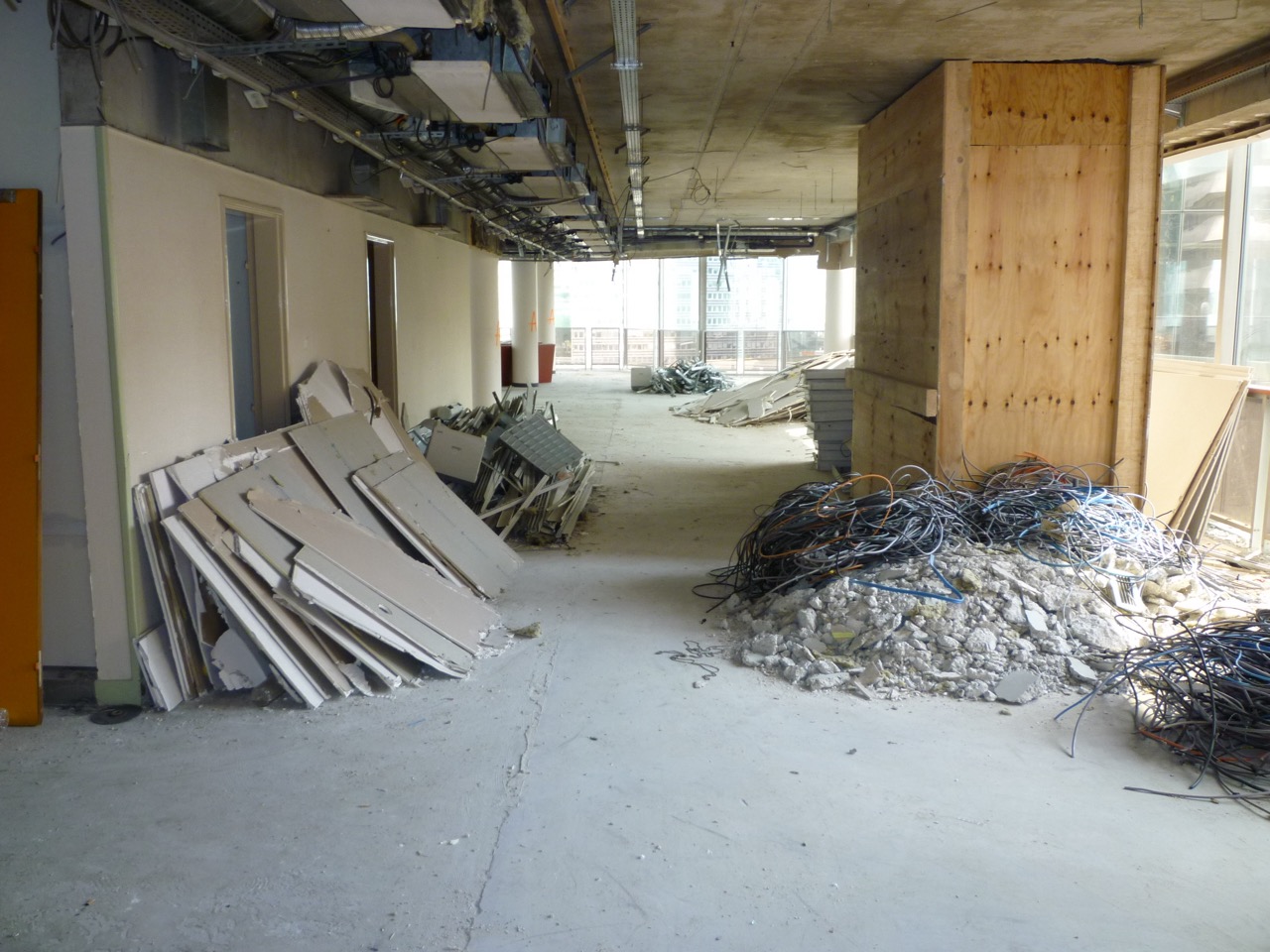
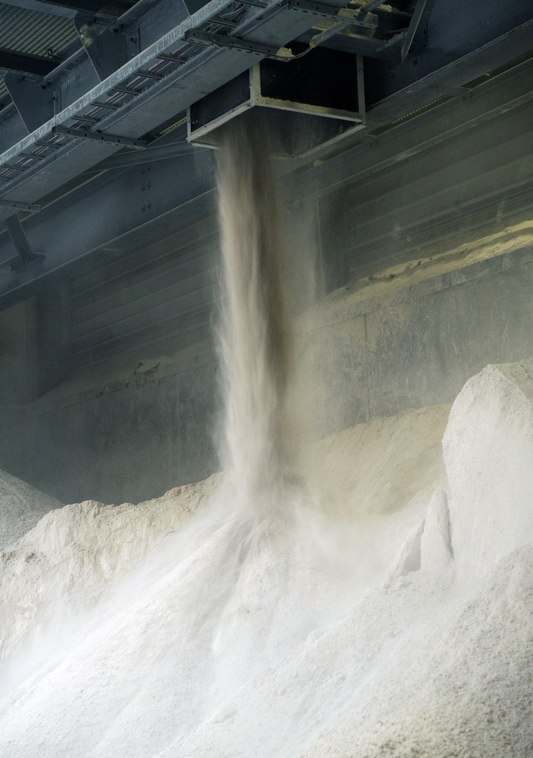
Eurogypsum is committed to stakeholder cooperation across the recycling value chain and supports a consistent European regulatory framework that simplifies and promotes gypsum recycling. Despite an increased use of recycled gypsum, however it will not replace the need for primary gypsum. The volume of available and suitable gypsum waste from construction and demolition will not match the growing needs for buildings and renovations in the short to medium term.
Therefore recycling and the extraction of primary raw materials are equally necessary to meet the growing demand for gypsum, which is further exacerbated by the decline in synthetic gypsum from coal-fired power stations.